Leaky Ducts and the Aeroseal Approach
Most of your ductwork is out of sight, which is exactly why leaks go unnoticed.
October 14, 2026 · 4 min read
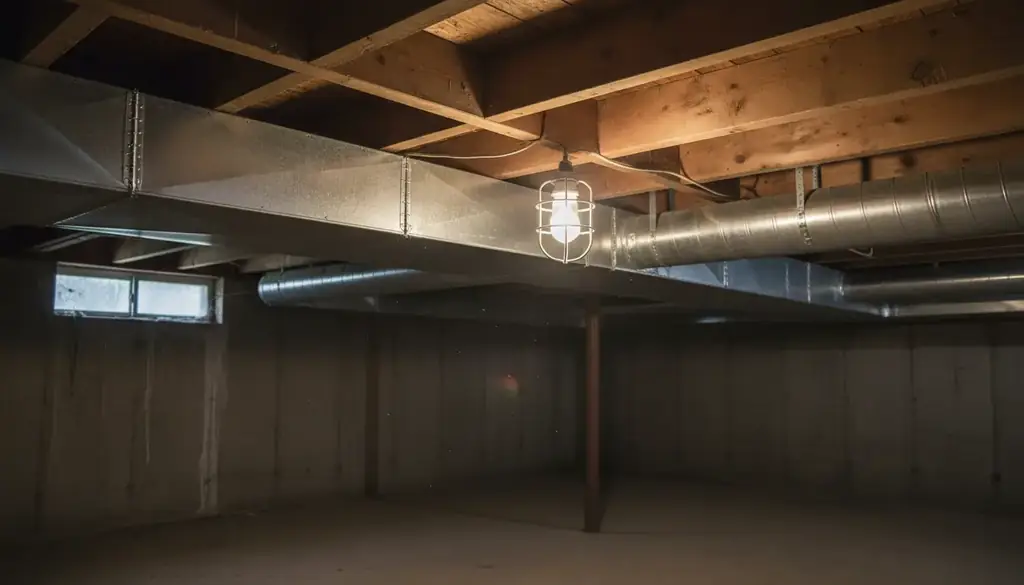
Most of your ductwork you never see. It runs above ceilings, inside walls, through crawl spaces and attics. When it leaks, the effect is spread out and easy to blame on something else: a bedroom that's never comfortable, a system that seems to run all the time, a house that stays dusty no matter what you do.
Ducts are a big system, and a leak in a big system is a big problem, even when no single hole looks like much. Because the ducts are hidden, most people only find out something is wrong when comfort or energy use starts to look odd.
R.A. Heating & Air Conditioning describes the problem this way. Heated or cooled air, which you've paid to condition, can end up in your attic, crawl spaces, and walls instead of your rooms. Meanwhile, cheaper, dirtier air from those same spaces gets pulled into the ducts and moves through your home. You lose the good air and gain the bad.
Why painting sealant on the outside falls short
The traditional fix is to brush a sealant material onto the outside of the ducts. That works on whatever a person can reach. R.A. points out two weaknesses. Only visible ducts can be repaired, and poor painting technique can lead to errors. Ducts behind drywall or deep in a ceiling cavity don't get touched at all, and a thin or missed spot stays a leak.
Sealing from the inside out
Aeroseal comes at the problem from the other direction. Instead of coating the outside, it works from inside the ducts themselves. Because the sealant travels with the air and goes where the leaks are, R.A. says no leak is missed, and you should see better results in both comfort and energy use. That's the company's published claim. The leakage report described below is how you check it for your own house.
The six steps
The process is short, and R.A. lays it out in six steps.
- Wall registers are covered so air escapes only through the leaks in the ducts.
- Sealant is injected into the ducts for approximately an hour.
- Continuous air movement keeps the sealant particles suspended in the airflow.
- As the air stream makes a sharp turn to exit through a leak, the particles collide with the leak edges and then with each other until they cover the leak.
- Once the ducts are sealed, only 1-2 oz. of the sealant material remains in them.
- A computer-generated analysis summarizing your home's or building's amount of leakage is produced, verifying that the process has been a success.
The logic is easy to picture. Air is only allowed to leave through holes in the ducts, so that's exactly where the particles go. The small amount of sealant left behind tells you it's gathering at the leaks, not lining the whole system.
Clues that your ducts may be leaking
No single sign proves a leak, but some patterns are worth a closer look. Ducts that run through an attic, crawl space, or wall cavity are the usual suspects, since any gap there lets conditioned air escape into spaces you don't use.
- One room is always harder to heat or cool than the rest.
- The system runs a long time without the house feeling comfortable.
- Dust shows up quickly even though you clean and change the filter.
- Attic or crawl space temperatures feel closer to the rooms below than you'd expect.
Why the leakage report matters
The last step is the one that separates this from guesswork. A computer-generated analysis summarizes how much leakage your home or building has, and R.A. describes it as verification that the process worked. You aren't asked to take anyone's word that the ducts are tighter. Ask to see the report, and ask what it shows.
The technology was developed by the University of California, which was granted the initial patents. It's now licensed exclusively to Aeroseal, and R.A. provides it in the local market. That makes it a specific licensed process, not a catch-all phrase for sealing ducts.
Is it the right move for your house?
Sealing fixes leaks. It doesn't fix every duct problem. Ducts that are the wrong size, poorly insulated, or badly laid out are separate issues, and a cooling unit that's the wrong size is a separate issue again. A good first step is a conversation about what your house is doing: rooms that run hot or cold, a system that never seems to catch up, energy bills that feel high.
R.A. says it will locate the problem areas in your system and propose a solution. If you're not sure whether leaks are the cause, that's the right place to start, before you decide on anything.
The Aeroseal Duct Sealing Solution page walks through the process in full. To talk it over, call R.A. Heating & Air Conditioning on the main line at (608) 882-6221.
R.A. Heating & Air Conditioning, (608) 882-6221
Call (608) 882-6221More articles
Furnace Noises: Which Ones Mean Call Now
Most furnace sounds are routine, but a few are the furnace telling you something is wrong.
What a 15-Point Furnace Inspection Actually Checks
A furnace tune-up is a defined list of checks, and knowing the list makes the visit easier to value.