Is Your Central Air the Wrong Size?
Sizing is the quiet decision at the center of every air conditioner replacement.
October 14, 2026 · 4 min read
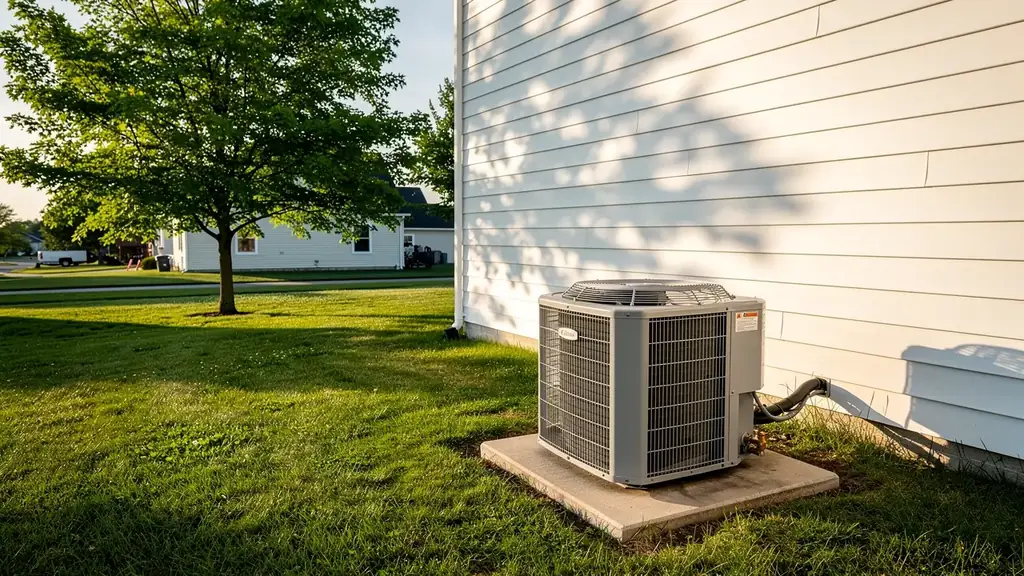
A central air system that's the wrong size doesn't come with a warning label. You just live with it: rooms that never quite cool off, a house that feels clammy, or one that blasts cold and then goes quiet. Sizing is the unglamorous decision at the center of every air conditioner replacement, and it's worth understanding before you sign anything.
Too small: warm and muggy
An undersized unit runs and runs. It can't keep up on the hottest afternoons, so the rooms farthest from the air handler stay warm and the air feels heavy. R.A. Heating & Air Conditioning puts it plainly: a unit that's too small leaves your rooms feeling warm and muggy. A system that never reaches a rest point also works harder than it should, which is true of any equipment that is always at full effort.
Too large: too cold, and not the safe choice it sounds like
Bigger sounds safer, and plenty of people assume an oversized unit is a bargain. R.A.'s page says a unit that's too large can overpower your home and make it too cold. There's a second problem that tends to follow. A big unit cools the air quickly, shuts off, and starts again soon after. Those short cycles give the system little time to pull moisture out of the air, so you can end up with a house that's cold and still clammy.
Signs the size might be off
You can't read a unit's size from the couch, but you can notice patterns. None of these proves anything on its own. Together they're a reason to ask questions.
- Some rooms stay warm and muggy on hot days while others are fine.
- The system seems to run nearly nonstop and still can't catch up.
- The house gets cold quickly, then the air turns clammy.
- The ducts are noisy when the system is running.
- Certain rooms are always too hot or too cold, no matter where the thermostat is set.
If more than one sounds familiar, the answer might be the unit, the ducts, or both. That's why the next two sections go together.
How a unit gets matched to your house
The method is measurement. R.A. says it takes proper measurements of your indoor spaces and matches them to the unit that will work best for the way you and your family live. That second half matters. Two houses with the same square footage can have different needs, depending on who's home during the day, which rooms get used, and how much sun a room takes in.
R.A. also handles equipment registration for you, which is one less chore after the install.
Ducts have to match the unit
Ductwork can be the wrong size, too. When ducts are too small, they can be noisy. When they're too big, the unit works inefficiently as it struggles to deliver cool air. When R.A. installs a new central air system, it asks whether some rooms were too hot or too cold, then assesses the ducts to see if they need better insulation or need to be replaced. Your answer to that question is useful information. A room that's always hot is a clue about airflow, not only about the thermostat.
Questions to ask any contractor
- How did you measure my home, and what did you measure?
- Why is this size right for how we live, and not only for the square footage?
- Will you look at the existing ducts, and what did you find?
- Who registers the equipment?
- Is the estimate free, and is the price firm?
A contractor who can answer the first three clearly has probably done the measuring. A contractor who quotes a size over the phone, before anyone has walked through the house, hasn't.
The summer 15-point check
Once the right unit is in, a yearly check helps it stay that way. R.A. provides a Summer Cooling 15-Point Service Check. It covers the electrical side (voltage and amperage to all motors, wiring and connections, electrical lock out circuits, starting contactor contacts), the cooling side (air temperature drop across the evaporator and across the condenser, refrigerant charge and possible leaks, evaporator superheat), and the mechanical basics (lubricating moving parts, belt tension, filters, and a condensate drain that's open). Thermostat operation is on the list too.
Like the winter check, it ends with a general equipment condition report to the owner, so you leave knowing where the system stands before the hottest weeks arrive.
Commercial care customers and VALUE program customers receive a discounted price on annual inspections. R.A. notes that the VALUE program is available first come, first served, because there are only so many technicians and hours.
For a new system, or a second look at one that never felt right, see the Air Conditioning Service page or call R.A. Heating & Air Conditioning on the main line at (608) 882-6221.
R.A. Heating & Air Conditioning, (608) 882-6221
Call (608) 882-6221More articles
Furnace Noises: Which Ones Mean Call Now
Most furnace sounds are routine, but a few are the furnace telling you something is wrong.
What a 15-Point Furnace Inspection Actually Checks
A furnace tune-up is a defined list of checks, and knowing the list makes the visit easier to value.